I’ve recently discovered a problem, and, after some soul searching for a viable solution, found myself digging back into technology that I haven’t used in cough 25 years. It’s stationery-related (perhaps one would even say Stationery Adjacent), but first, a little background.
Read MorePilot G-Tec-C4
Known in other markets as the Hi-Tec-C for reasons unknown.
Reviewing a Long-Lost Pilot G-Tec-C4 (it's rather brilliant)
Regular listeners of my podcast, Stationery Adjacent, will know that I used to write all about my fascination with fancy pens on my now-defunct blog, Write Experience. And, as a recovering stationery blogger, I continually find neat pens, paper and ink that I’ve collected and stashed around my house - often in one of my vintage roll-top desks, many drawers (36 drawers, not including the built-in cubbies).
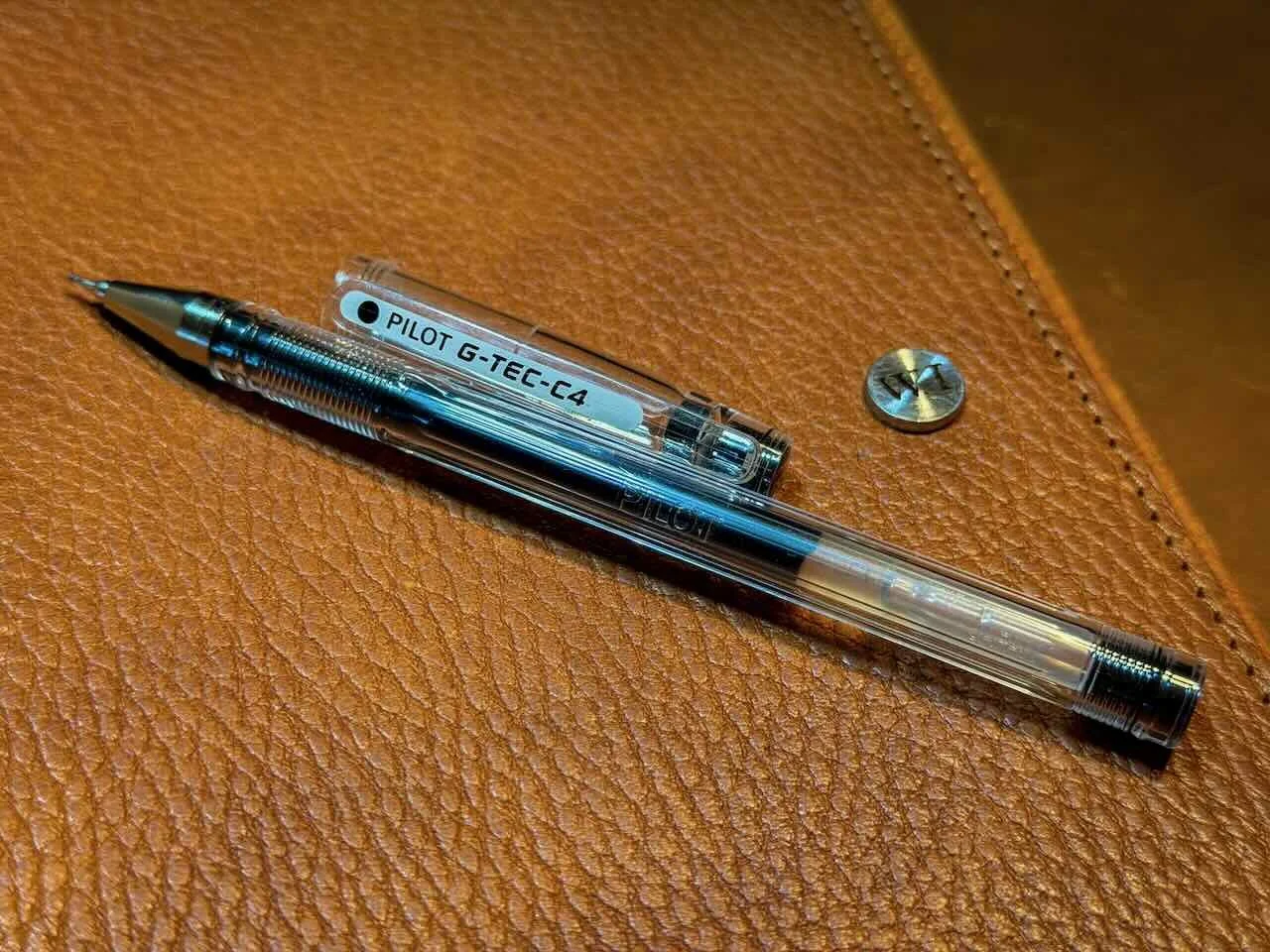
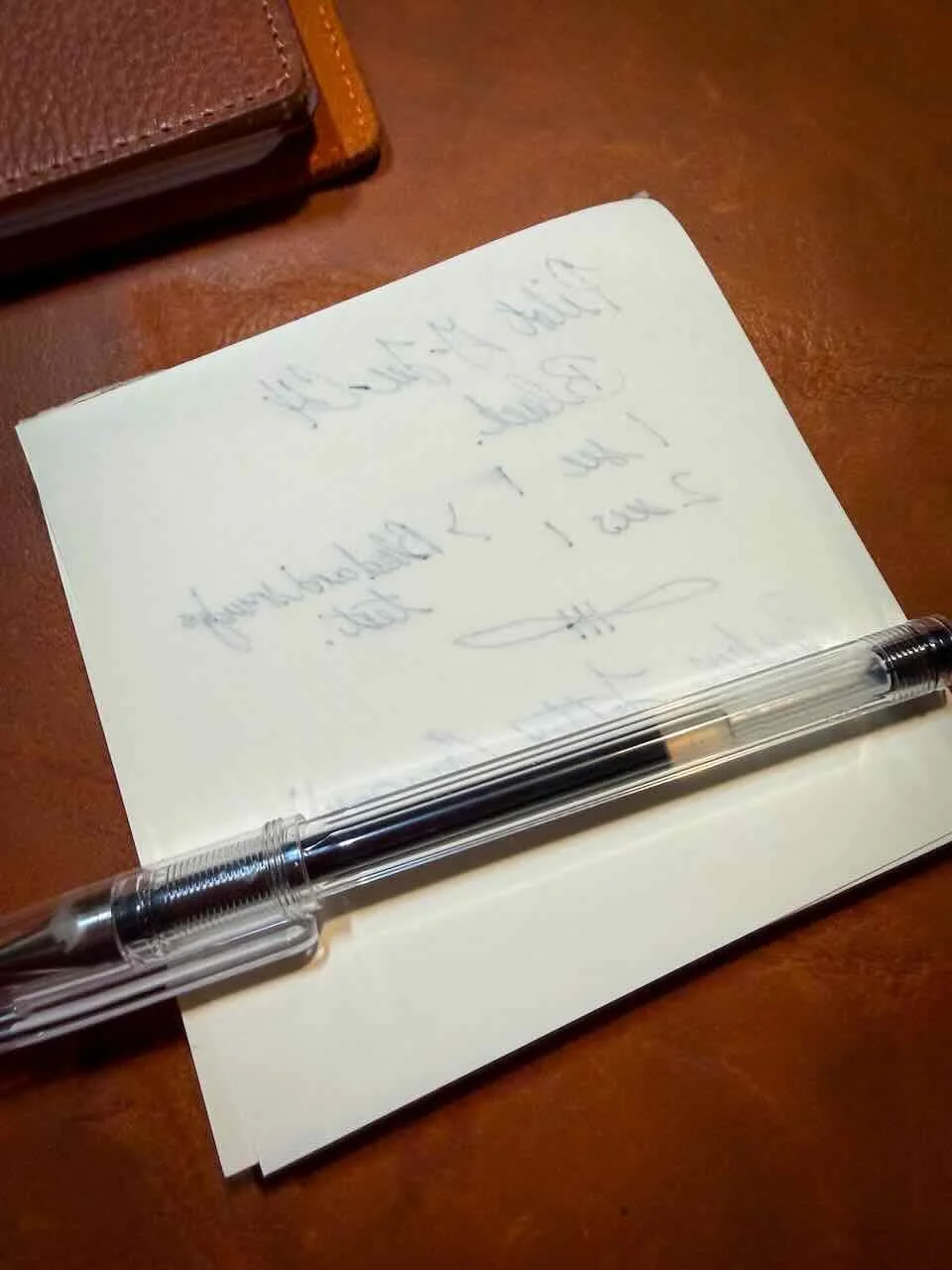
I was organizing some stuff the other day and found a long-lost Pilot G-Tec-C4 (known in other markets as the Hi-Tec-C for reasons unknown). This pen has languished in a drawer for at least 5 years, so this isn’t a cutting-edge, new product review. However, as I uncapped it and wrote with it, ink flowing straight out of the drawer, I was amazed by the quality of the writing experience, which I’m not sure I ever gave it’s due before.
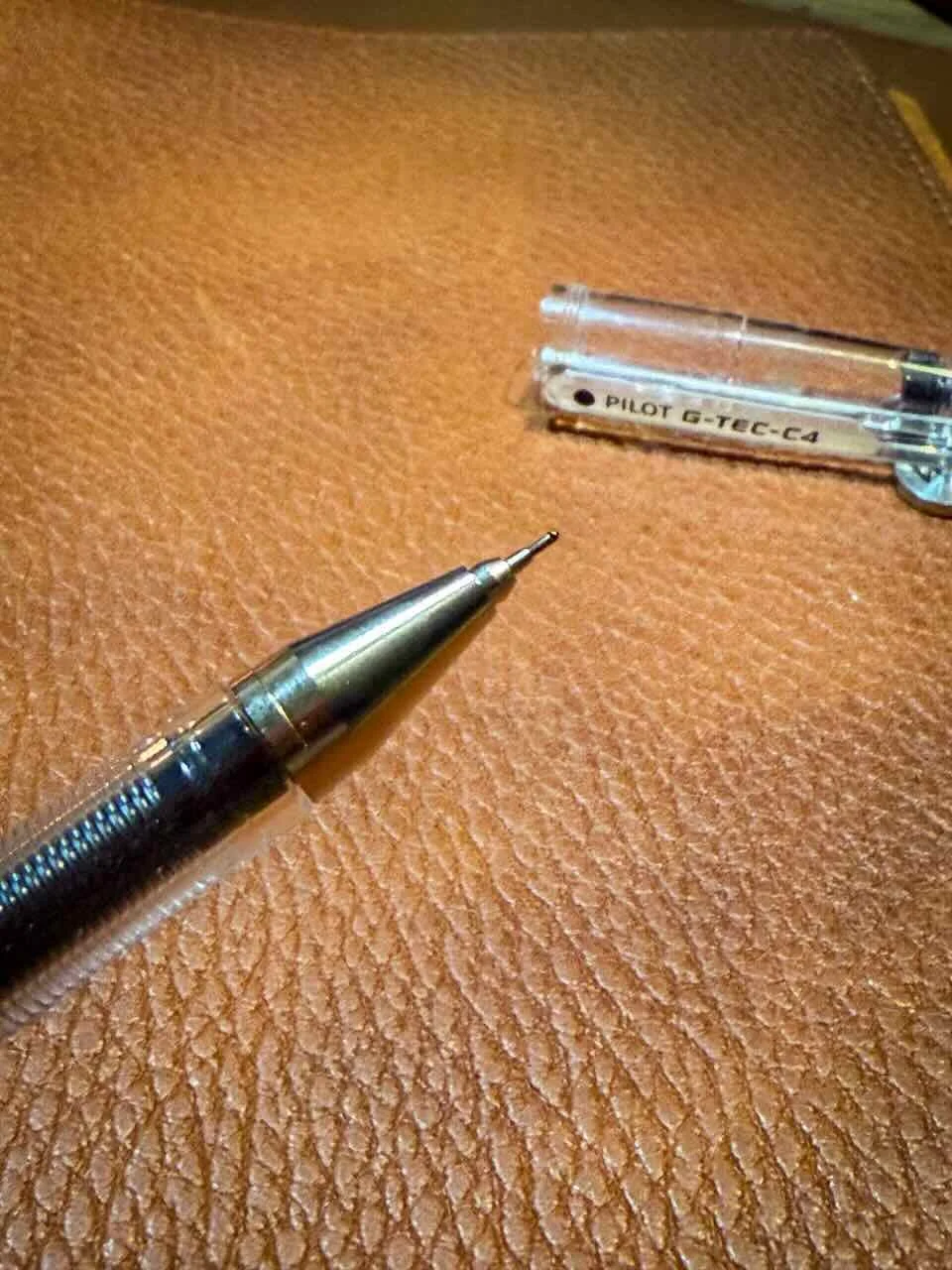
So what is the Pilot G-Tec-C4? In case you can’t tell by its catchy marketing name, it’s an ultra-fine rollerball pen in a crystal-clear barrel. It’s what my cohost, Stu Lennon, would call a hypodermic needle, as the tip is only 0.4mm wide, which results in a written line of only 0.2mm. This is not a signature pen - flowy writing flourishes will not be your friend with this pen. But the bio-polymer ink, which is apparently made from a resin using a micro-organism similar to yeast, flows exceedingly well. Info courtesy of Cultpens
I don’t know exactly what “micro-organism ink” means, and I’m not sure I care enough to dig down a Google rabbit hole, but what I can say is that this ink does not evaporate in the pen barrel, even after 5-plus years of living in a desk drawer. For a micro-tipped pen, the ink flow is quite amazing. The tip glides on the paper, or at least it does if you have a soft-pressure writing style like mine.
The ink starts right away, as soon as the pen touches paper, which is a pet peeve of mine with many ball-point pens. And the flow continues uninterrupted while the tip touches paper. Unlike those awful blobs that accumulate at the tip of some pens, this pen just puts down a perfect line.
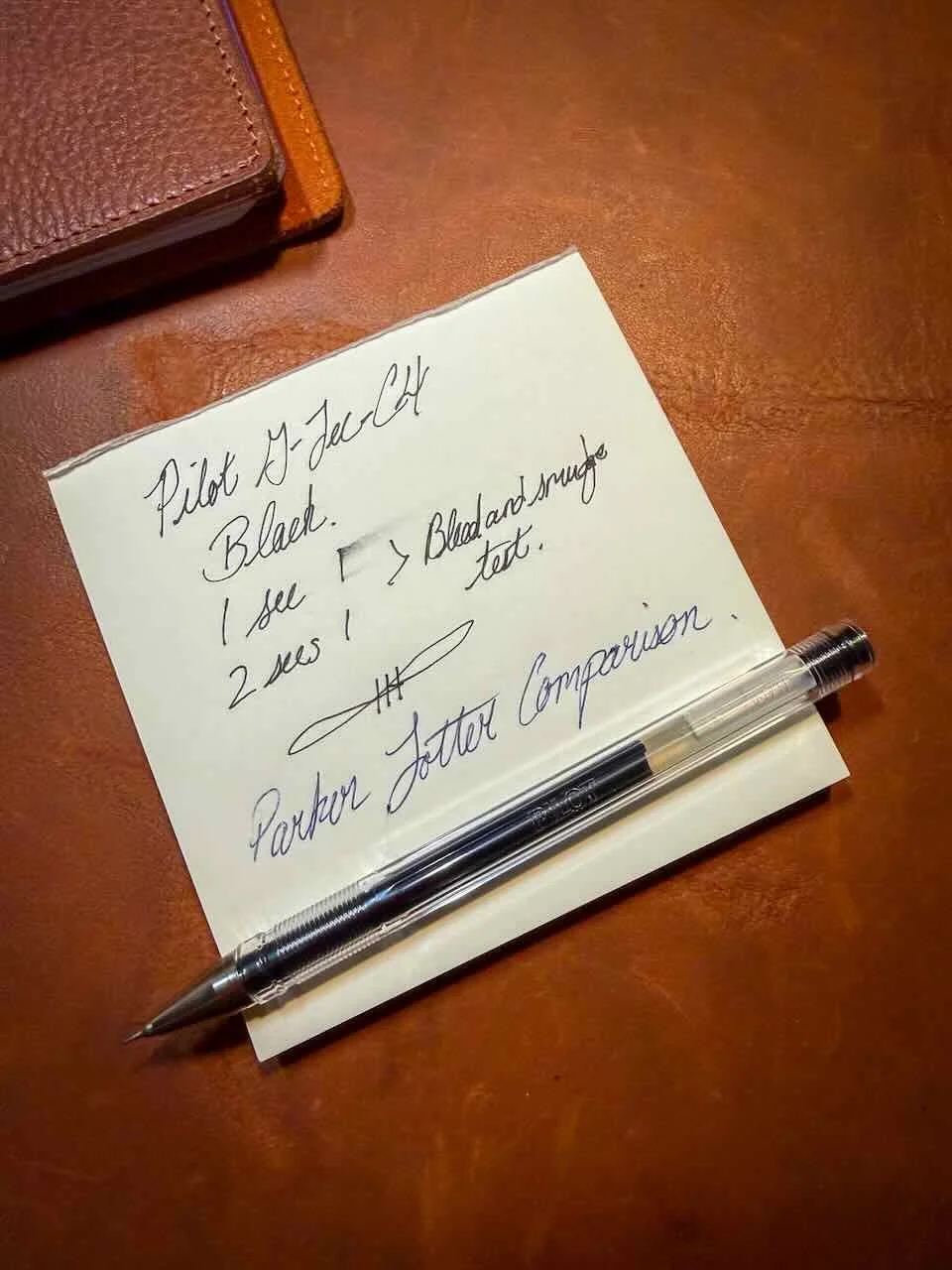
Dry time is pretty solid as well. In testing, I can generate a very small smudge by rubbing the ink for 1-2 seconds after writing a line, usually just at the start and stop of the line, which I guess is slightly thicker. After 2 seconds, it’s completely dry. I think this solid dry time would make this ink perfect for lefties, or anyone using less-than-quality paper.
I tried this in my William Hannah planner, which requires the use of blotting paper with any fountain pen, even my Japanese fine-nibbed, and this created solid, dry lines.
My pen is black-inked, which is one of my least favourite colours for writing. Other colours are available, and likely somewhere else buried in the desk-of-many-drawers. But the black is a solid performer and looks great on the page.
The micro-organism doesn’t like highlighters, as a little smudging does occur, but it’s not terrible. But, something to think about.
I see that these are currently available on Amazon and at many big-box stationery stores. I already have a 5-pack in my cart in different colours, as I’m that impressed with this little pen.
It’s a basic, crystal-clear barrel, which means it’s made of clear plastic. The barrel is quite thin - think about the size of a Bic Crystal. For most people, this will be fine, if not the most comfortable, for long periods of writing. I have quite large hands, and it’s a little on the thin side. I can see that if I were trying to write the next great Canadian saga by hand, this would get uncomfortable for me. But for a page or two of journalling, I’d definitely recommend it.
Solid pen. And a surprise at just how much I love it. For now, it’s displaced some high-end, gold-nibbed fountain pens in my daily rotation. Which says a lot.
Extended Warranties - Security or Scam?
Extended warranties. Those horribly awkward conversations with the “business managers” at auto dealerships, where maximum pressure sales are applied, and negotiations become stressful and long. How polite do I need to be, and how long must I listen to the sales pitch and the hugely inflated ask at the end to be polite? It’s a dance I always hate. It’s well known that these items are where dealerships make the most profit, which is why they’re so heavily pushed.
Over the last few years, I’ve seen these extended warranties be pushed more and more frequently outside of the auto industry. Occasionally, it even works. I mean, I do pay monthly for AppleCare insurance on my iPhone to replace the screen should I drop it. I have never dropped a phone (touch wood). I justify the small expense because the phone is extremely critical to my life, a fast, efficient repair is worth the money, and replacing the entire phone is expensive.
The one place I’ve seen these warranties pop up that I have a harder time with is furniture. We purchased new couches last year, and it came with the hard sell on a hefty premium to insure them for a number of years. Odd, as I’ve never had a catastrophic failure of a couch or bed. And I can’t remember the last time a chair failed and dumped me on my rear.
This weekend reminded me of this craze. I went to a big-box office supply store in a nearby city because I needed a new, armless task chair for my recently rebuilt music studio, and my previous armchair was starting to delaminate. Armless chairs are important for playing guitar, and, like shoes, purchasing one without trying it on is ill-advised.
The big-box store, Staples, coincidentally had a sale on in-stock chairs, so along with the inexpensive studio chair, I also purchased a new chair for my analog writing desk - this one comfortable and high-backed, as I do like to nap in it between spurts of inspiration, or, to be honest, just to avoid things like work.
Armless task chairs are surprisingly rare, but I found an inexpensive one that was on sale for $99.99. The other chair was still a very reasonable $179.99. Given that both are task-specific and unlikely to be used for an hour or so per day, and often not even daily, I felt these were good value for the money.
On the way to the cashier, I was waylaid by a floor assistant’s extended warranty sales pitch. And then this happened again when I got to the actual cashier. I do have to hand it to Staples that their training program on warranties is pretty extensive, as I had two different employees recite the same speech about the benefits of purchasing this warranty that my lucky chairs “qualified” for.
Fair enough. Everyone had a job to do. I remained polite and let the employee recite the spiel, as dealing with the public is a tough job that I wouldn’t enjoy. What blew me away was the high price of the warranty on these chairs, which I guess justifies the corporate-mandated hard sell.
For the inexpensive Staples-branded armless task chair, the cost of the three-year extended warranty was $15, or 15% of the purchase price. However, hold your beer: the warranty on the other chair costs $49.99, which is almost a 28% premium!
Unsurprisingly, I declined, and I’m sure I will be fine living with the consequences of such an expensive risk.
But the best part was when I was assembling those chairs in the evening and reading the manual. Both chairs come with a 7-year warranty on any part. So, what would I be paying extra for the 3-year extended warranty? Peace of mind, I guess. The “easy-button”?
But a company selling an extended warranty that duplicates the manufacturer’s pre-existing warranty. That’s pretty scammy. Come on, Staples, you can do better than that.
Prairie Valley #16: Where the Black Widows Live.
I remember the first time my wife found a black widow spider nest on our upstairs deck, the summer after moving to this area. I was ready to purge the area with fire. Napalm, propane torches, gasoline fires; I was considering all options. But, as the deck is attached to the house, I knew this probably wasn’t a good idea as I didn’t think the insurance claim would go in my favour.
Read MoreOld technology is still better than new....at least for distraction-free writing
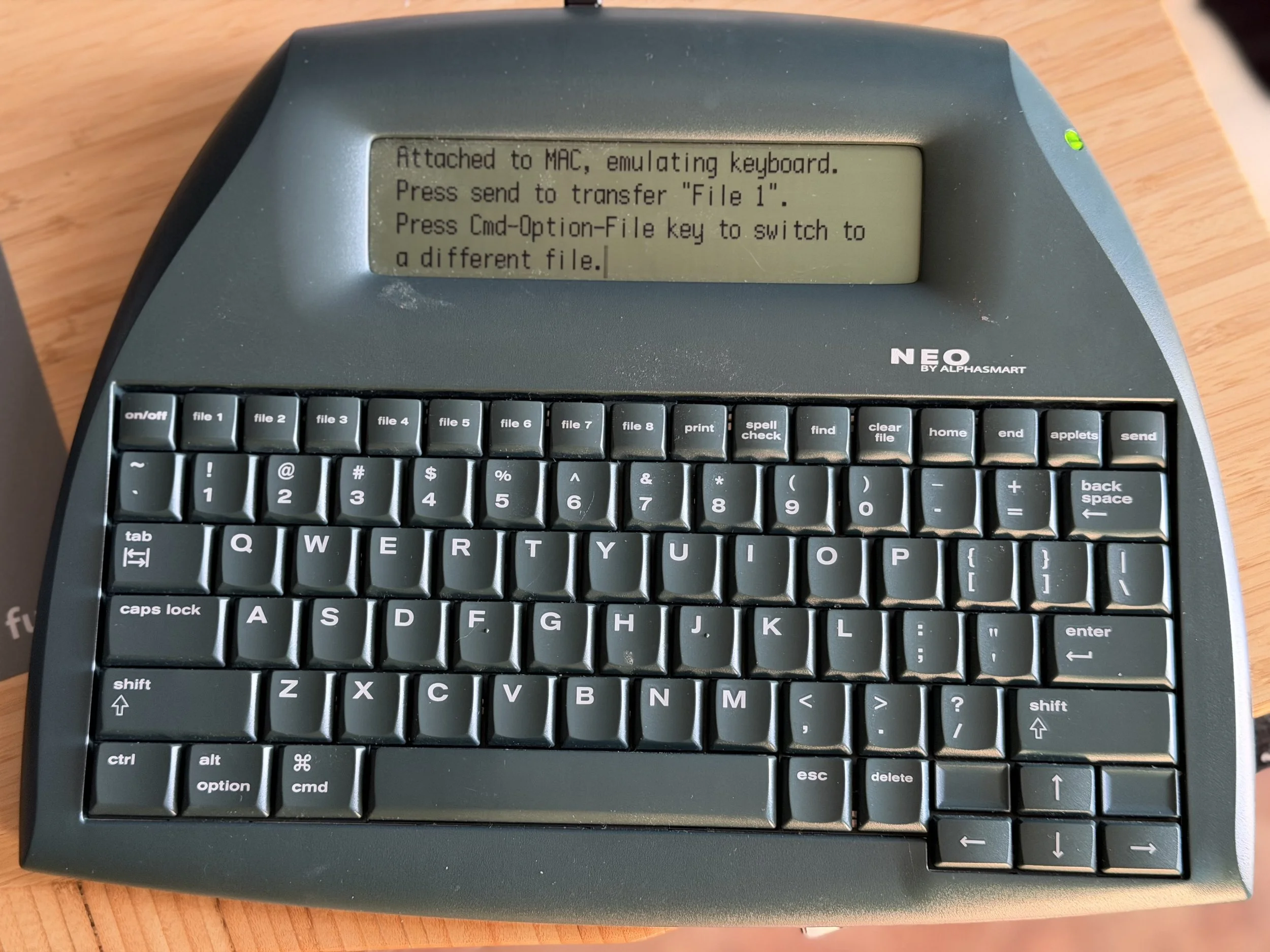
I’m writing this on an antiquated, limited piece of technology from the early ‘oughts. I’m avoiding my nearby devices that have enough computing power to launch an Apollo rocket, in favour of a little keyboard with a non-backlit, black-and-white LCD screen that shows only four lines of text. And I’m loving it.
Read More